Application
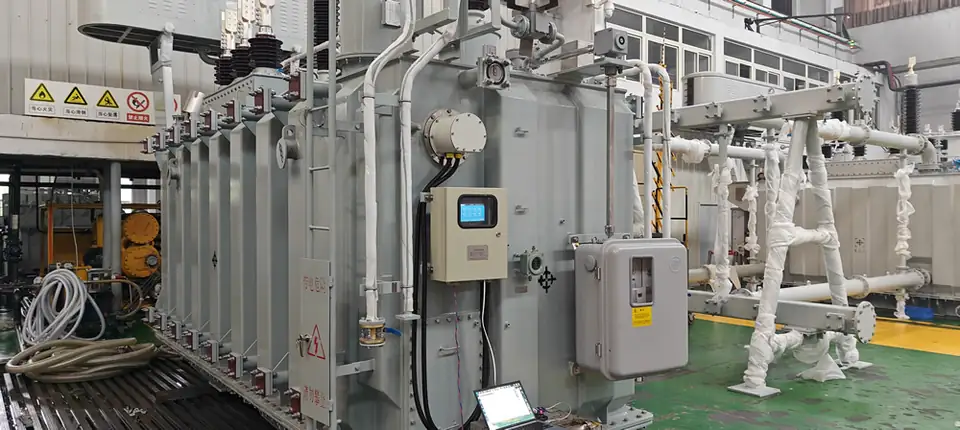
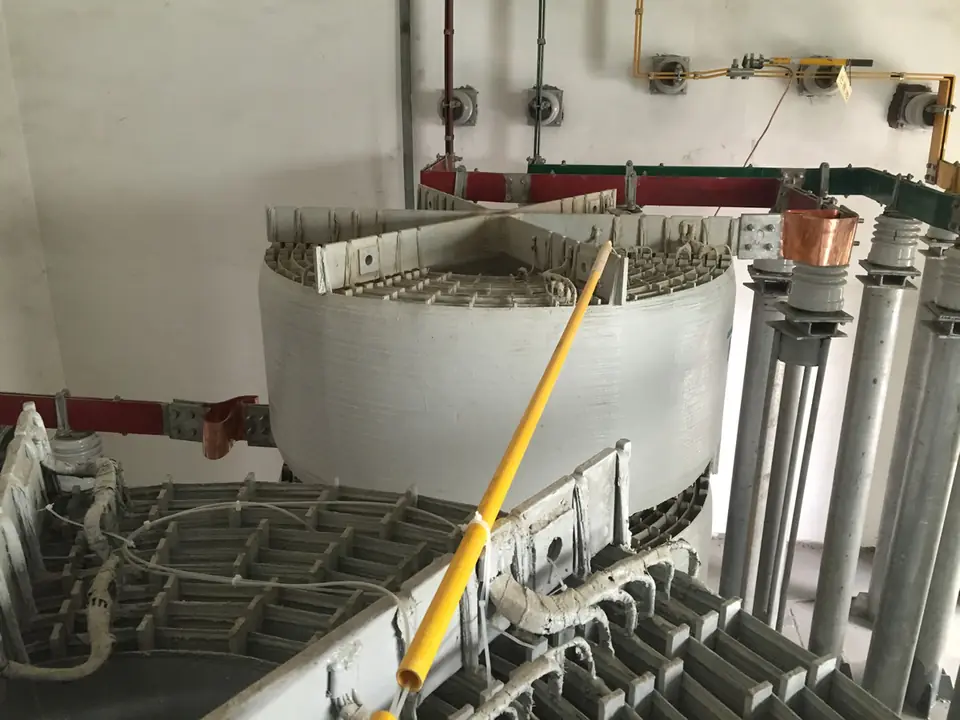
Industrial rectifier cabinet
 info@innofj.comContact Engineering
FIBER OPTIC TEMPERATURE MONITORING CASE
A fluorescence-based fiber optic temperature monitoring system was applied to an industrial rectifier cabinet to measure selected internal thermal points with electrically isolated sensors and provide local alarm and temperature monitoring functions.
Discuss Your Application →
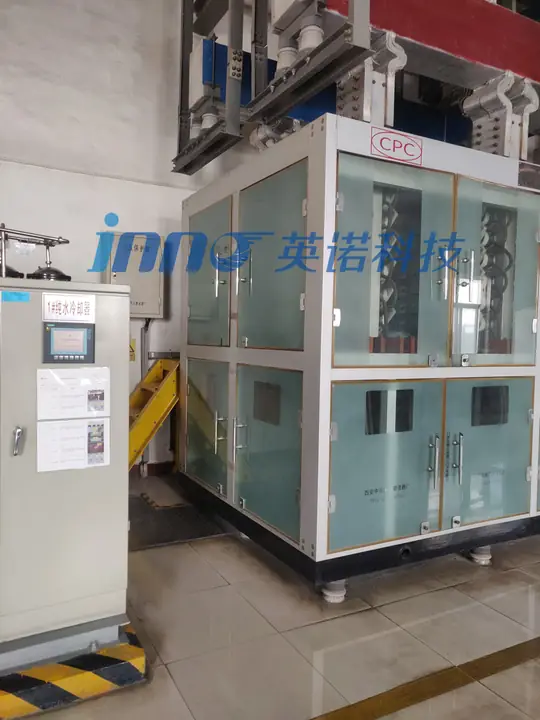
Industrial rectifier cabinet
High current, electrical switching and electromagnetic interference
Selected internal thermal points
Fiber optic sensors with local monitoring and alarm functions
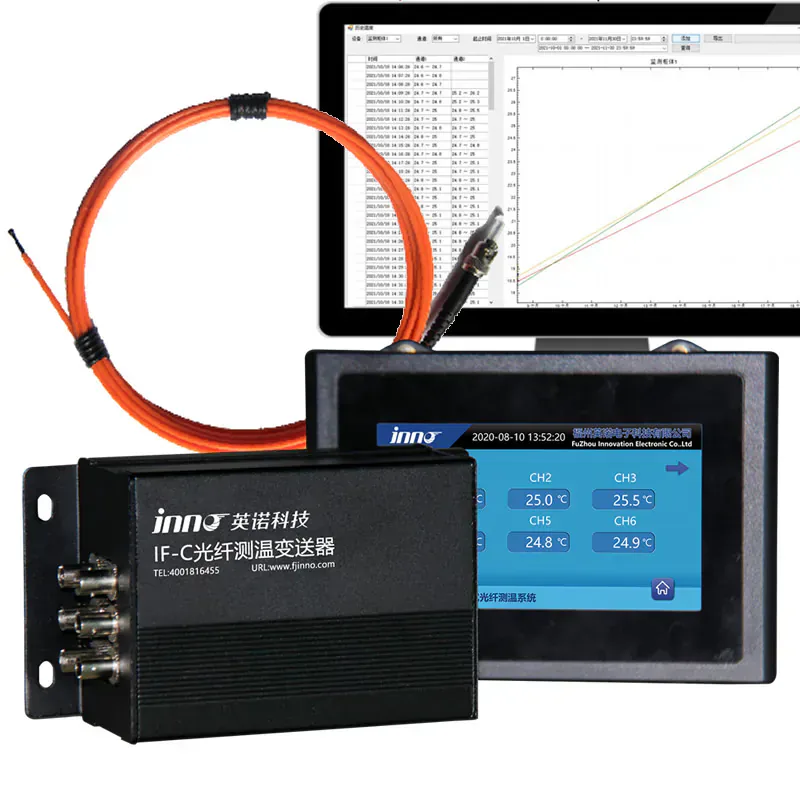
This project applied fluorescence-based fiber optic temperature sensing to an industrial rectifier cabinet. Multiple fiber optic probes were arranged at selected internal locations requiring temperature supervision, allowing individual points to be monitored without introducing conductive electrical sensing paths.
Temperature signals are collected by the fiber optic monitoring hardware and presented through the local monitoring interface. The configuration also provides alarm functions for temperature supervision during equipment operation.
Industrial rectifier cabinets combine high-current conductors, power electronic components, switching devices and compact internal structures. Connections, terminals and other current-carrying locations can develop localized temperature rise during operation.
The application required direct measurement at selected internal points while maintaining electrical isolation and avoiding measurement problems caused by electromagnetic interference. Temperature information also needed to be available locally for operating personnel and alarm monitoring.
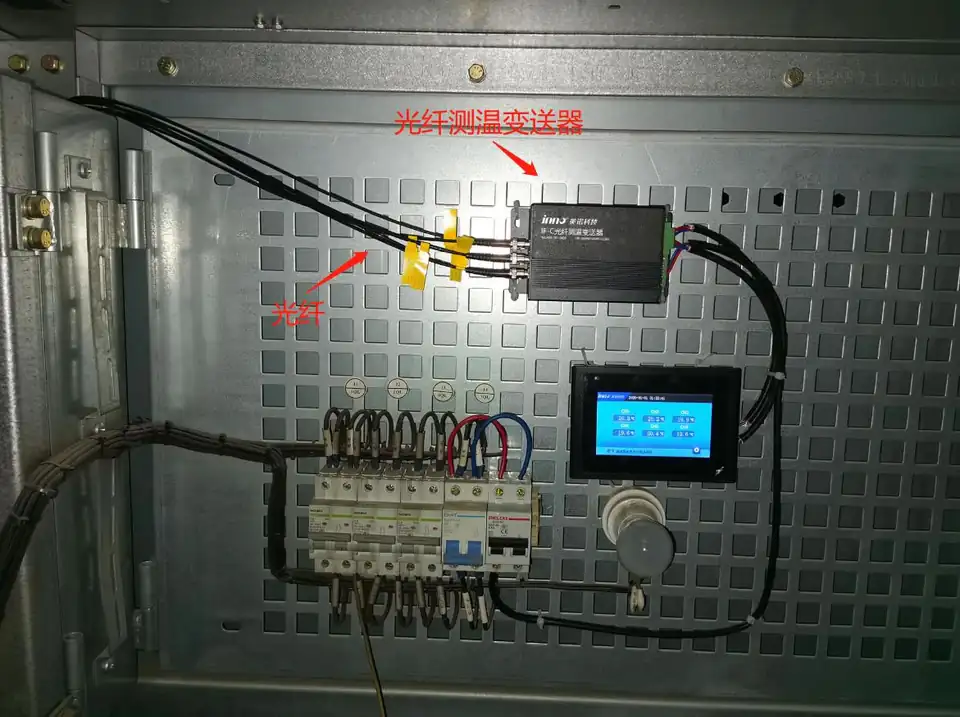
Fluorescence-based fiber optic temperature probes were installed at selected monitoring points inside the rectifier cabinet. Each probe measures temperature at a defined location, while optical fibers carry the sensing signals to the monitoring hardware.
Because the sensing path is optical, the probes provide electrical isolation and immunity to electromagnetic interference. This makes the measurement method suitable for power conversion equipment where conventional electrical sensor wiring may require additional insulation and shielding considerations.
Multiple fiber optic sensing channels were used to monitor selected locations inside the cabinet independently. Each channel corresponds to a defined measurement point, making it easier to identify abnormal temperature conditions at individual connections or components.
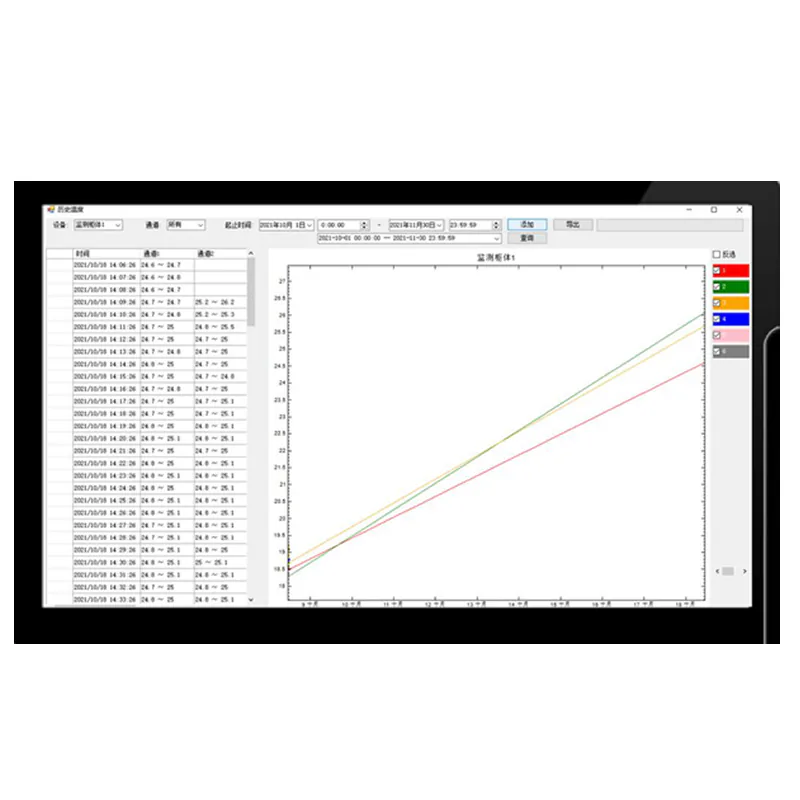
The monitoring configuration provides real-time temperature display and local alarm functions. Temperature data can also be recorded and reviewed through the associated monitoring software where configured.
Fiber optic probes were positioned at the required thermal monitoring locations while maintaining the cabinet manufacturer’s electrical clearances and mechanical operating space. Optical cables were routed to avoid interference with conductors, switching mechanisms and service access areas.
The sensing channels were connected to the fiber optic monitoring hardware for centralized temperature acquisition. The local display and monitoring software provide operators with access to individual measurement points, temperature status and alarm information.
The completed installation provides multi-point temperature monitoring inside the industrial rectifier cabinet using electrically isolated fiber optic sensors. Individual thermal locations can be monitored independently, with temperature information available through the local monitoring interface and alarm functions.
The project provides a practical reference for fiber optic temperature monitoring in rectifier cabinets, power conversion equipment and other electrical cabinets operating with high current and strong electromagnetic interference.
Tell us your equipment type, monitoring points and integration requirements. We can help select the appropriate fiber optic temperature sensing configuration.