
Transformer temperature monitoring systems track operating temperatures, detect abnormal heating and deliver temperature data to alarms and supervisory systems. Hot spot monitoring systems add fiber optic probes at selected winding locations, so readings come from the winding itself instead of from oil temperature or a load-based calculation. Buyers searching for a transformer hot spot monitoring system manufacturer are generally comparing complete solutions: probes, optical cables, tank hardware, monitoring instruments and integration support. This article outlines what those systems include, where each configuration is used and what a capable manufacturer should offer.
Contents
- Transformer Temperature Monitoring and Direct Hot Spot Measurement
- What a Complete Hot Spot Monitoring System Includes
- Applications and Monitoring Solutions
- What a Capable Transformer Monitoring System Manufacturer Offers
- Working with INNOFJ
- FAQs
Transformer Temperature Monitoring and Direct Hot Spot Measurement
Oil-immersed transformers are commonly fitted with oil temperature indicators (OTI) and winding temperature indicators (WTI), while dry-type transformers usually rely on winding temperature sensors connected to a temperature controller. Indicated or estimated winding values describe the general thermal condition of the transformer. Direct fiber optic measurement adds readings from specific winding locations, and both kinds of data are often used together.
Fiber optic probes measure temperature only at the point where they are installed and do not locate the absolute hottest spot in a winding. Measurement points are therefore chosen from the thermal design of the transformer, and INNOFJ reviews them with customers as part of its direct hot spot monitoring work.
What a Complete Hot Spot Monitoring System Includes
Fluorescence-based fiber optic probes are installed at the measurement points, and optical leads and extension cables carry the signal to the monitoring instrument. Oil-immersed transformers also need tank penetrators, flange components and a protective cover where the fiber leaves the tank. Multi-channel instruments convert the optical signals into temperature readings and handle local display, alarm outputs and communication with plant systems.
| Component | Function |
|---|---|
| Fluorescence fiber optic probes | Measure temperature at one defined winding point, with no metallic signal wiring at the sensing tip |
| Optical leads and extension cables | Carry the optical path from the internal probe to the external instrument |
| Penetrators, flange plates, flange rings and covers | Form the tank-boundary transition on oil-immersed transformers |
| Multi-channel transmitters and hosts | Convert probe signals into temperature data; provide display, alarm relay and communication functions according to the selected configuration |
| PLC and SCADA integration | Maps temperatures and alarms into the plant or substation monitoring system |
Channel count, outputs and accessories differ between products and are confirmed for each project. INNOFJ's multi-channel transmitter is configurable from 1 to 64 channels, with RS485 / Modbus communication in the standard configuration, relay outputs and optional analog outputs, while its oil-immersed monitoring system is listed with 1–18 customizable channels. Relay outputs serve temperature alarm and control integration and operate alongside the transformer's own protection devices without replacing them. Complete product selection starts from the transformer monitoring product collection.
Applications and Monitoring Solutions
Oil-Immersed Power Transformers
Winding probes in oil-immersed transformers are routed to selected internal locations and leave the tank through penetrators mounted in a flange plate, with a protective cover over the external fiber connections. INNOFJ's oil-immersed transformer monitoring system is configured around this complete path, covering probes, boundary components, monitoring channels, local display, alarm contacts and RS485 / Modbus output. Armored and polyimide-protected probe constructions are available and are selected according to winding design and routing.
Internal probes require access to the winding, so installation takes place during manufacturing or when the active part is opened for a major overhaul. Existing oil-immersed transformers in service generally cannot receive internal winding probes without that access, and options for such units are assessed case by case.
Dry-Type Transformers
Dry-type transformers have no tank wall to cross, so planning concentrates on probe positions between coils, fiber routing and channel count. INNOFJ's dry-type transformer monitoring system combines probes, acquisition hardware, local alarms and communication outputs for cast-resin and industrial distribution transformers. Winding points are defined at the design stage or during a retrofit review.
Transformer Manufacturing and OEM Integration
Transformer manufacturers building monitoring into new designs need probe positions on the winding drawings, a matching channel count, suitable connectors and an instrument that fits the control panel. INNOFJ's OEM temperature sensing solutions include custom probe lengths, diameters and sheath materials, channel arrangements, enclosures, labeling and test records. OEM modules are also available for installation inside the customer's own equipment.
Substations, Utilities and Power Plants
Utilities and plant operators mainly need temperature data and alarms to reach existing supervisory systems. Communication uses RS485 / Modbus or analog outputs, depending on the selected instrument, and PLC and SCADA integration covers register mapping, tag naming, alarm thresholds and operator display layouts for each site. Box-type substation transformers have a dedicated monitoring configuration for compact installations.
Multi-Point Winding Monitoring
Each probe measures one point and occupies one monitoring channel, so comparing windings, phases or thermal regions requires several probes connected to one instrument. Readings from all channels appear on a central display, with alarm thresholds and communication outputs configured for the whole group.
What a Capable Transformer Monitoring System Manufacturer Offers
Transformer monitoring equipment stays in service for years and has to fit the transformer design, the control panel and the plant network. Manufacturers able to meet all three bring a matching product range, controlled production, qualified engineers and clear documentation.
Manufacturing Qualifications and Quality Records
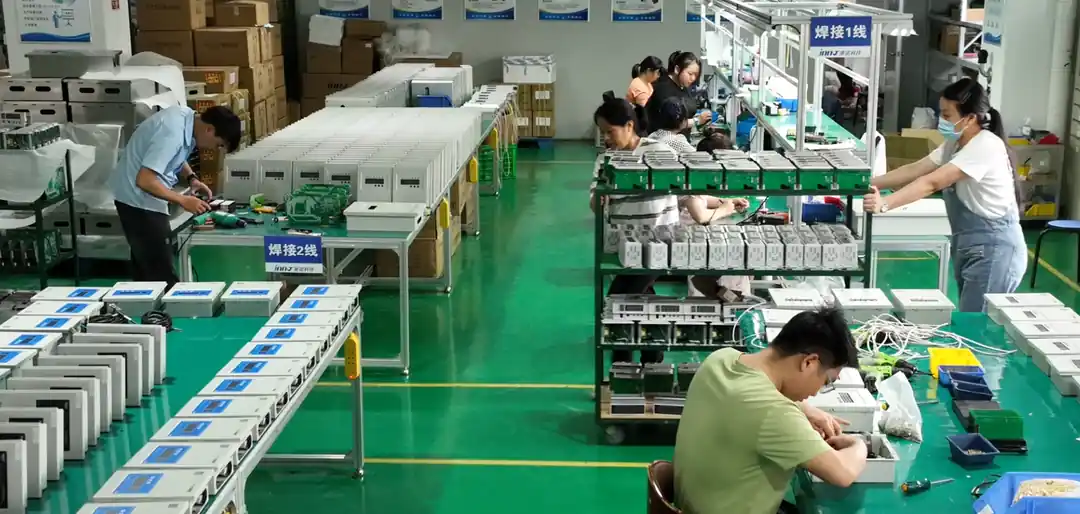
Fuzhou Innovation Electronic Scie&Tech Co., Ltd. (INNOFJ), based in Fuzhou, Fujian, China, develops and manufactures fluorescence fiber optic temperature sensors, transmitters, monitoring systems and OEM measurement modules. Production covers sensor assembly, optical connection, instrument integration, inspection and application-specific configuration, and configured units are checked for probe-channel assignment and external connections before delivery. Featured customers and partners include organizations in power, electrical equipment and infrastructure.
Quality documentation is published at company and product level. ISO 9001 (quality), ISO 14001 (environmental), ISO 45001 (occupational health and safety) and ISO 27001 (information security) certificates cover INNOFJ's management systems. Product-level records are separate: CE EMC, CE LVD and RoHS documents, together with selected inspection reports such as a power-frequency withstand voltage test report for a fluorescent fiber optic temperature sensor. Which records apply to a specific configuration is confirmed with the engineering team for each project, and further company details are on the INNOFJ company page.
Engineering Support and Project Documentation
Technical engineers handle product selection from the information a project supplies: transformer type, winding points, fiber route, channel count, temperature range and required outputs. That review leads to a matched probe construction, fiber length, instrument and set of installation accessories. For OEM and integration projects, engineering support extends to mechanical fit, interface planning, channel mapping and commissioning coordination.
Project documentation follows the same path. Standard products carry published specifications, and OEM or integration projects add drawings, wiring information, channel assignments, register mapping, labeling and test records prepared for the customer's engineering and commissioning teams.
Communication and After-Sales Cooperation
Inquiries reach INNOFJ engineers through a web form, email (info@innofj.com) or WhatsApp. Product questions, customization requests and project details are reviewed directly with application engineers, starting from equipment drawings or photos, sensing locations, temperature range, cable routing, connectors and outputs. Lead time depends on design complexity, validation work, component availability and order quantity, and is confirmed once requirements are defined. OEM programs are planned from prototype through repeatable production, and engineering contact continues through installation and commissioning. Probe lengths, channel assignments and output settings recorded at the first delivery give repeat orders a clear reference.
Working with INNOFJ
INNOFJ offers fluorescence fiber optic probes, extension cables, installation accessories, monitoring instruments and configured systems for oil-immersed, dry-type and box-type substation transformers, along with OEM customization and PLC / SCADA integration support. Interfaces, software and accessories differ by product, so each configuration is defined from the customer's measurement-point plan.
International customers are invited to contact INNOFJ's engineering team for product options, system configuration, OEM customization or technical questions. Useful starting information includes the transformer type (oil-immersed or dry-type), monitoring-point requirements, approximate fiber route and the display, alarm or communication outputs needed.