
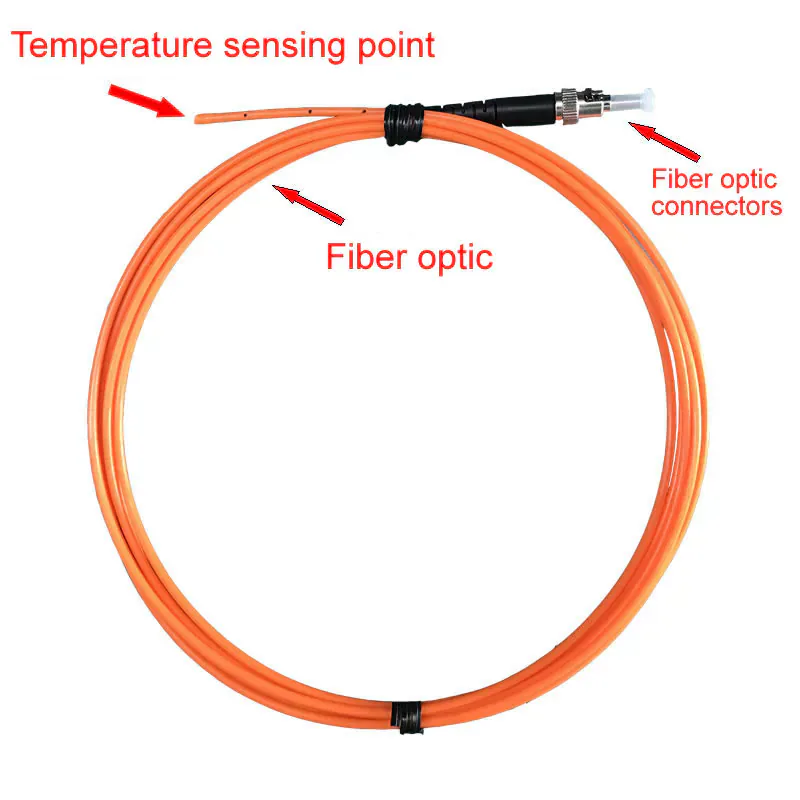
FLUORESCENCE-BASED POINT TEMPERATURE SENSING
Standard Fluorescent Fiber Optic Temperature Probe
Designed for direct point temperature measurement in high-voltage, EMI, RF, microwave and other electrically sensitive environments. Probe structure and fiber length can be configured for different measurement locations.
- Fluorescent fiber optic temperature sensing
- Electrical isolation for high-voltage measurement
- EMI / RFI immune temperature measurement
- Configurable probe diameter and fiber length
- Compatible fiber optic monitoring instruments
Product Overview
The Standard Fluorescent Fiber Optic Temperature Probe is designed for direct point temperature measurement where electrical isolation, EMI immunity or compact probe placement is required.
A fluorescent sensing material at the probe tip responds to excitation light transmitted through the optical fiber. The return optical signal is processed by a compatible temperature transmitter or monitoring instrument to provide temperature data.
Probe dimensions, fiber length, protection and connection options can be selected according to the measurement location and operating environment.
Key Benefits
Probe Design & Working Principle
Probe Construction
Provides point temperature measurement.
Carries excitation and return optical signals.
Selected according to the installation environment.
Matches the selected temperature transmitter or monitoring instrument.
Extends the optical connection where additional routing length is required.
How It Works
Excitation Light
The transmitter sends excitation light through the optical fiber.
Fluorescent Probe Tip
The sensing material at the probe tip responds to the excitation light.
Return Optical Signal
The fluorescence return signal travels back through the optical fiber.
Temperature Data
The transmitter processes the optical signal and converts it into a temperature value.
Excitation Light → Fluorescent Probe Tip → Return Optical Signal → Temperature Data
Temperature is determined at the location of the fluorescent sensing tip, providing direct point measurement without an electrical sensing element at the measurement point.
View Fluorescent Fiber Optic Sensing Technology →Selection, Configuration & Installation
Probe selection depends on the measurement point, temperature range, available installation space, fiber routing and monitoring instrument.
When to Choose the Standard Probe
- General point temperature measurement
- High-voltage or electrically sensitive measurement locations
- Strong EMI / RFI environments
- Standard probe geometry fits the measurement point
- Configurable fiber length is required
- No heavy mechanical armor is required
When a Specialized Probe May Be Required
- Transformer winding installation
- Restricted probe geometry
- Additional mechanical protection
- MRI / RF applications
- Special low-temperature environments
- Application-specific mounting requirements
Configuration Options
Information Required for Selection
- Equipment type
- Temperature range
- Measurement location
- Probe dimensions
- Required fiber length
- Number of sensing points
- Operating environment
- Monitoring instrument / interface
Send us your equipment drawing or measurement requirements for probe selection.
Ask for Product SelectionInstallation Considerations
Measurement Point
Define the actual location where temperature needs to be measured.
Probe Fit
Confirm available space and required probe geometry.
Fiber Routing
Plan the path from the sensing point to the monitoring instrument.
Fiber Length
Allow sufficient length for the required routing distance.
Mechanical Protection
Select appropriate protection according to the installation environment.
Technical Specifications
Standard specifications and configurable options for the fluorescent fiber optic temperature probe.
Final specifications depend on probe structure, temperature range, fiber length and application requirements.
Typical Applications
Compatible Monitoring Instruments
The probe connects to compatible INNO instruments selected for the required channel count and output interface.
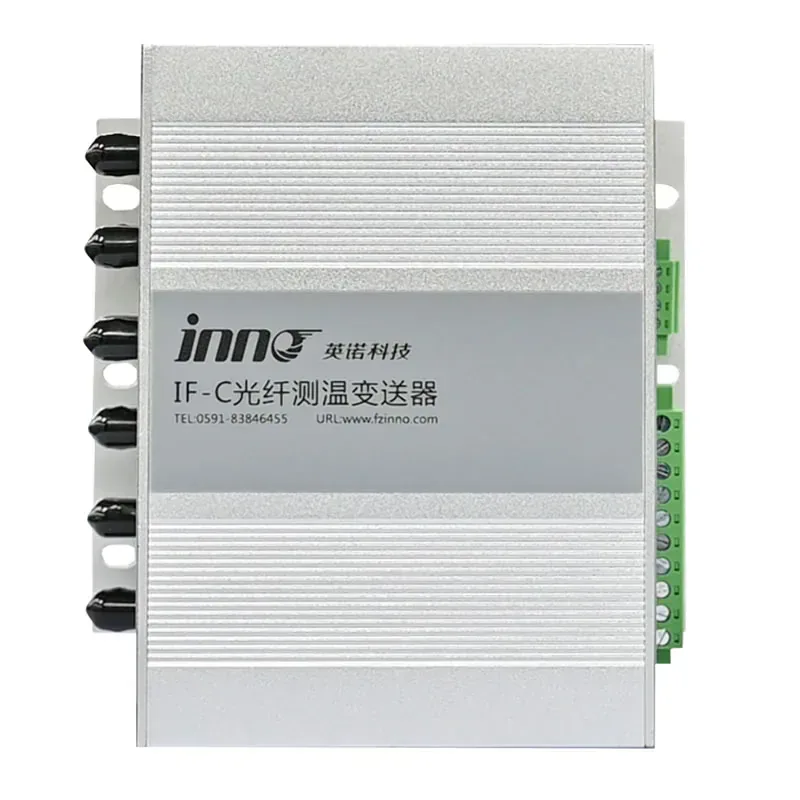
Multi-Channel Fiber Optic Temperature Transmitter
Converts signals from connected fluorescence point probes into temperature data.
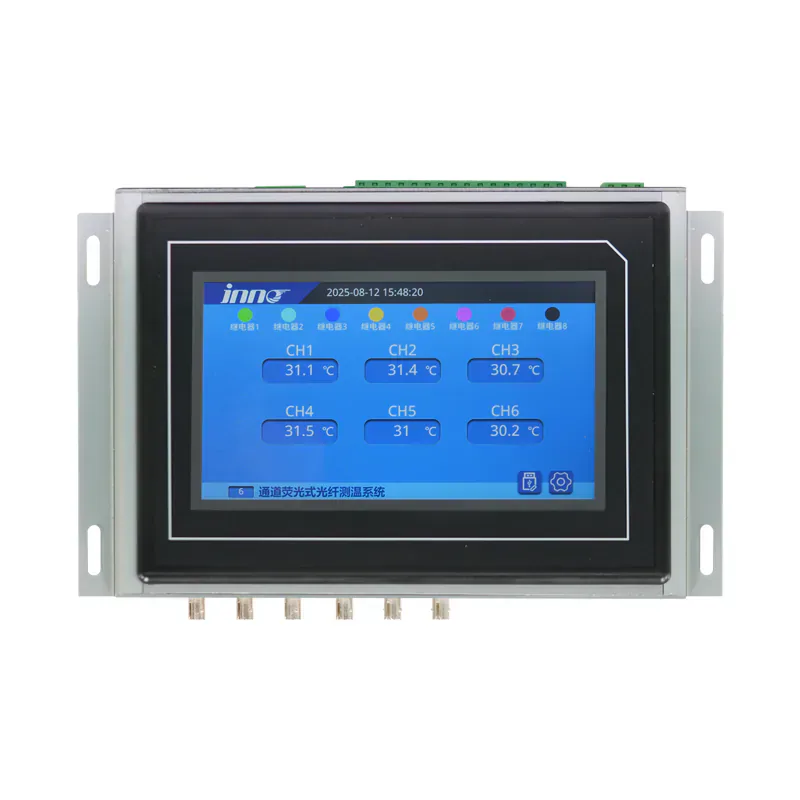
Fiber Optic Temperature Monitoring Instrument
Provides local presentation for compatible optical temperature channels.
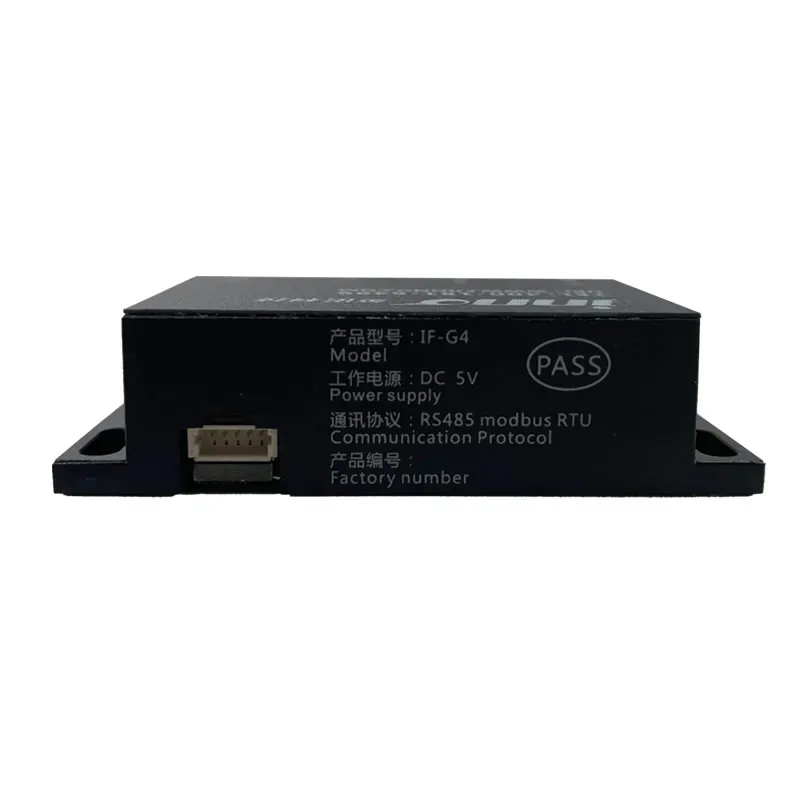
IF-G4 Fiber Optic Temperature Module
Compact optical acquisition hardware for equipment integration.
Frequently Asked Questions
What temperature range is available for this fiber optic probe?
The available temperature range depends on the selected probe configuration. Standard configurations can cover a broad industrial temperature range. Send us your required range for confirmation.
Can the fiber length be customized?
Yes. Fiber length can be configured according to the distance between the sensing point and the monitoring instrument.
Can the probe dimensions be customized?
Probe dimensions and structure can be selected or customized according to the available installation space and measurement location.
Which monitoring instruments are compatible with this probe?
The probe can be used with compatible INNO fiber optic temperature transmitters, monitoring instruments and OEM modules. The final connection depends on the selected interface and channel configuration.
Can this probe be used in high-voltage environments?
The optical sensing path is electrically isolated and suitable for many high-voltage measurement applications when the probe structure and installation arrangement are selected for the equipment.
What information is needed for probe selection?
Please provide the temperature range, measurement location, required fiber length, probe dimensions, number of sensing points and monitoring interface requirements.
PROBE SELECTION SUPPORT
Configure the Probe for Your Measurement Point
Send us your measurement location, temperature range, fiber length and monitoring requirements. Our engineering team can recommend a suitable probe configuration.
- Equipment Type
- Temperature Range
- Measurement Location
- Required Fiber Length
- Probe Dimensions
- Number of Sensing Points
Need a Fiber Optic Temperature Probe for a Specific Measurement Point?
Send us your application requirements for probe selection and configuration.